My Blog List

Tuesday, May 20, 2014

給百多年歷史的黑白相片還原色彩!

Mulberry Street,紐約,攝於1900年
你所看見的相片是拍攝於1880—1920年的美國,然而那時候彩色攝影尚未普及,技術亦未夠成熟至拍出這種質素的彩色相片,所以相片所見的色彩其實是利用Photochrom這一技術還原相片本來的色彩!
這些相片的黑白原相由圖像設計師Marc Walter擁有,他委托Detroit Photographic Company利用Photochrom技術把這數次張充滿歷史價值的相片還原色彩,並輯錄成American Odyssey一書。
slide_346269_3646214_free
Battery的日落,紐約
slide_346269_3646236_free
大峽谷(Grand Canyon),亞利桑那州
001-029 000_1 intro corr SPH_ADI.indd
士兵與水手紀念拱門(Memorial Arch),Hartford,康乃狄克州
001-029 000_1 intro corr SPH_ADI.indd
Arch Rock,密切根州
001-029 000_1 intro corr SPH_ADI.indd
波特蘭燈塔(Portland Head Light),緬因州(Maine)
slide_346269_3646239_free
Mount Lowe Railway,加利福利亞州(California)
001-029 000_1 intro corr SPH_ADI.indd
阿帕契族族長,James A. Garfield
001-029 000_1 intro corr SPH_ADI.indd
合恩角(Cape Horn),哥倫比亞河(Columbia River)
001-029 000_1 intro corr SPH_ADI.indd
中藥店,唐人街,三藩市(San Francisco)
slide_346269_3646238_free
Mariposa Grove,"Three Graces",優勝美地國家公園(Yosemite National Park)
slide_346269_3646217_free
紐約
slide_346269_3646235_free
William Henry Jackson,Zuni Pueblo Indians,the Rain Dance,新墨西哥州(New Mexico)
事實上部份相片拍攝的時間還早過Lumière兄弟發明Autochrome(天然彩色相片技術),所以雖然有點出貓,但這些相片也算是最早期的美國彩色相片呢!
avatar

關於作者

So - I am here on earth for just a little while.

    Tuesday, December 17, 2013

    The death of photography: are camera phones destroying an artform?

    From presidential selfies to never-ending Instagram feeds, the world is now drowning in images. Celebrated photographers debate the impact of this mass democratisation on their craft

    Visitors take pictures of tidal waves under the influence of Typhoon Usagi in Hangzhou
    In the moment … snap-happy onlookers taking pictures of tidal waves after a typhoon in China. Photograph: Chance Chan/Reuters
    "It's really weird," says Antonio Olmos. "Photography has never been so popular, but it's getting destroyed. There have never been so many photographs taken, but photography is dying."
    I'd asked the 50-year-old, award-winning, London-based Mexican photographer what he thinks is going to happen to the medium after a week in which it has come more unflatteringly into focus than ever before. This was the week in which the most reproduced photograph was a photograph of someone (Helle Thorning-Schmidt) taking a photograph (a selfie of the Danish prime minister with two men becoming known as Helle's Angels, David Cameron and Barack Obama) at Nelson Mandela's memorial service. It was an image that seemed to typify the narcissistic nature of smartphone photography.
    But here's the twist. That photograph of a trio of politicians was captured by Agence France Presse photographer Roberto Schmidt using a digital SLR camera and a huge 600mm lens, and press photographers hardly ever use iPhones. But should they? Today the chief victims of the cameraphone are makers of point-and-shoot cameras. Only two years ago Annie Leibovitz helped put the nails in the coffin of such middle-market cameras by saying that the iPhone was the "snapshot camera of today". But tomorrow? Maybe cameraphone functionality will become so superb that all you losers who spent four- and five-figure sums on digital SLRs will be overcome with buyers' remorse and press snappers will be shooting with the same cameras as the rest of us.
    This was also the week in which psychologists argued there is a "photo-taking impairment effect". That means if we take a photo of something we're less likely to remember it than if we'd looked at it with our eyes. "When people rely on technology to remember for them," argued psychologist Linda Henkel of Fairfield University in Connecticut, "counting on the camera to record the event and thus not needing to attend to it fully themselves – it can have a negative impact on how well they remember their experiences."
    We're used to the complaint that we're taking pictures rather than living in the moment, and that makes us experientially poorer. But Henkel's study seems to go further, suggesting we don't even remember the stuff we take pictures of, making the snap-happy nature of modern photography doubly mindless.
    "People taking photographs of their food in a restaurant instead of eating it," says Olmos. "People taking photographs of the Mona Lisa instead of looking at it. I think the iPhone is taking people away from their experiences."
    But what does Olmos mean by saying photography is dying? He argues that in the 1850s the rise of photography made many painters, who had previously made nice livings from painting family portraits, redundant. Now it's the turn of professional photographers to join the scrap heap. "Photographers are getting destroyed by the rise of iPhones. The photographers who used to make £1,000 for a weekend taking wedding pictures are the ones facing the squeeze. Increasingly we don't need photographers – we can do just as well ourselves."
    Tourists photographing the Mona Lisa in the Louvre in ParisTourists photographing the Mona Lisa in the Louvre in Paris. Photograph: Imagebroker/Alamy
    But doesn't that mean that some photographers are becoming obsolete, rather than that photography itself is dying? Isn't what we're witnessing a revolution in photography, thanks to digital technology, that makes it more democratic? "In one sense yes. I used to be sent on assignment to Iraq, Afghanistan and to photograph the Intifada – partly because there weren't any local photographers. Now thanks to digital technology, there are locals taking images at least as good as I can.
    "Don't get me wrong. I love iPhones and Instagram," says Olmos. "But what I worry about is that Kodak used to employ 40,000 people in good jobs. What have they been replaced by? Twelve people at Instagram."
    Progress often has casualties, I suggest. "I don't oppose progress in photography," he replies. "I'm pleased there aren't darkrooms and suspicious toxic chemicals you guiltily throw down the sink. I'm pleased there are no longer photography companies who got silver out of Congo by bribing Mobuto for their film, as used to happen."
    But there's a stronger reason that makes Olmos argue photography is dying. "The iPhone has a crap lens. You can take a beautiful picture on the iPhone and blow it up for a print and it looks terrible."
    But who needs prints in a paper-free world? "For me the print is the ultimate expression of photography," he retorts. "When I do street photography courses, I get people to print pictures – often for the first time. The idea is to slow them down, to make them make – not just take – photographs."
    Guardian photographer Eamonn McCabe agrees: "At the risk of sounding like one of those bores defending vinyl over CDs, I think there's a depth to a print you don't get with digital." He recently looked up an old print of a picture he took of novelist and Nobel Laureate Doris Lessing, who died last month. "It was a black and white print I took with a Hasselblad, a tripod and a lot of window. It took me back to the days when photography didn't make people like me lazy."
    Why is digital lazy? "It's a scattergun approach. You snap away thinking, 'One of these shots will work', rather than concentrate on capturing the image."
    McCabe used to take two rolls of 24 exposures on a typical assignment. "Now I can shoot 1,000 pictures in one of these sessions on digital – and I give myself a massive editing problem as a result. I don't think photography's dead, it's just become lazy. People are taking lots of pictures but nobody's looking at them."
    For a more positive sense of what digital and cameraphone technology has done to photography, I speak to Nick Knight, the British fashion photographer who's just done two big assignments entirely on iPhone – a book of 60 images celebrating the work of the late fashion editor Isabella Blow, and a campaign for designer clothes brand Diesel. "I work frequently on the iPhone. It's almost become my camera of choice."
    BRITAIN-OLY-2012-PARALYMPICSSpectators taking pictures of Team GB's celebration parade after the London 2012 Olympics. Photograph: AFP/Getty Images
    Indeed, Knight reckons the democratising revolution catalysed by improved mobile phone cameras is as radical as what happened in the 1960s when fashion photographer David Bailey binned his tripod and started using a handheld camera. "It gave him freedom and changed artistically what photography was. The same is true for me with the iPhone. For years I would shoot on an 8x10 camera, which wasn't intended to be moved. Now I have freedom."
    But what about the "crap" iPhone lens? "Who cares? The image isn't sharp? Big deal! One of my favorite photographers is Robert Capa, whose pictures are a bit blurry sometimes – I love them because he's captured a moment.
    "What I'm into is visual connection to what I'm taking, not pin-sharp clarity. It's absurd for people to think all photos need to be high-resolution – what matters, artistically, is not how many pixels it has, but if the image works. People fetishise the technology in photography more than any other medium. You don't get anybody but paintbrush nerds fixating on what brush the Chapman brothers use. The machinery you create your art on is irrelevant."
    Not quite. The iPhone has revolutionised Knight's photography and he knows it. "I can wrap an image around a sphere, I can take out the black or white values of a picture. I couldn't tell you how it works, but it thrills me."
    But isn't that a loss? As McCabe says: "We don't engage with the camera any more. We don't know how it works."
    "I don't care about all that," says Knight. What he's engaged by is how photography has become truly democratic. "When I was a kid there was just one camera per family, if that. Now everybody has one and uses it all the time. That's great." But why? Knight has been researching images of punk bands lately. "There are hardly any images, and all of them are from on stage. Compare that with now – at a Kanye West gig you see a sea of cameras, and there's a database of images. I think that's fantastic – the new medium is much more democratic."
    ALTERNATIVE CROP US President  Barack ObDanish prime minister Helle Thorning Schmidt's selfie with Cameron and the Obamas at the Nelson Mandela memorial service in Johannesburg. Photograph: Roberto Schmidt/AFP/Getty Images
    But doesn't incessant picture-taking, as psychologists argue, make us forget? "That's old rubbish," says Knight. "Like that old nonsense about how sitting too close to the TV will infuse you with x-rays. My dad went around a lot of the time shooting with a video camera when I was a kid. Now we have lots of great old home videos as a result. So what if someone stands in front of a Matisse and takes a picture to look at on the bus home? I think that's great if they want to."
    But it's hard for professional photographers not to feel threatened. "Staff photographers are an increasingly scarce commodity, thanks to aggressive cost-cutting by newspapers and magazines, and amateur photographers are exploiting technological advances to produce stunning images, often using no more than their mobile phones," saysMagda Rakita, a 37-year-old student at London's University of the Arts and a professional photographer.
    "But technological advances work to our advantage, too. They allow professional photographers to share our work quickly and widely, and tell stories in engaging, innovative ways. Think, for example, of multimedia productions, iPad applications or eBooks, as well as the ability to make work accessible through Facebook, Twitter or Instagram. The latter mediums can be hugely significant tools for photographers and storytellers working with marginalised groups who, until recently, would not have had the opportunity of participating in the wider discussion and challenging mainstream views."
    But what about earning a living? She says: "Creating your audience is essential in a new financial model that increasingly relies on crowdfunding."
    In any case, established photographers don't necessarily have to worry about the democratisation of their medium. "I'll survive in this profession because I have skills," says Olmos. "I'm a storyteller in images; my compositions are better than most people's. Just because you've got a microprocessor in your computer doesn't make you a writer. And just because you've got an Instagram app on your phone you aren't a great photographer."

    Sunday, October 27, 2013

    在堆填區拍攝小狗︰給牠們最後的機會

    landfilldogs01
    紐約攝影師 Mary Shannon Johnstone 是對於流浪貓狗充滿熱誠的攝影師,你還記得「〔嚴重慎入〕拍攝人道毀滅的真相」嗎?引起了非常大的討論,也讓更多人了解到其實人類對於貓狗的傷害是何等可怕。而攝影師也不只是揭示陰暗的世界,她還身體力行,自2012年底開始一項 18 個月的攝影計劃,就是每星期從北卡羅萊納州的遺棄中心領一隻小狗出來,帶去當地的堆填區拍攝,以精彩而富有生命力的照片吸引人們領養。由於牠們很快就會被「人道毁滅」,所以這也成了小狗們的最後機會……
    攝影師在專頁「Landfill Dogs」裏,把小狗們分成三類,分別是已領養、待領養及無人領養。上圖的小狗名叫 Rose,攝於 2013 年2月16日,她就在拍攝兩日後被人領養了,可喜可賀,照片本身也非常漂亮!
    為甚麼攝影師選擇在堆填區拍攝?理由有二︰首先如果小狗最終難逃一死,這裏就會是牠們的葬身之地,其次,堆填區本身就是將垃圾轉化成土地及生機,喻意著一種重生,正如遭遺棄小狗的命運……攝影師帶小狗來,還會用不少時間去替牠們熱身、散步、玩耍,以拍出真正有個性與靈魂的照片,而不是困於中心的喪氣小狗。以下首先是已領養組︰
    Ciara (女)
    landfilldogs04
    Claus (女)
    landfilldogs02
    Dominic (男)
    landfilldogs03
    Karsten (男)
    landfilldogs10
    待領養組︰
    Marcy (女)
    landfilldogs05
    Tickles (女)
    landfilldogs06
    Pansy (女)
    landfilldogs07
    Daisy (女)
    landfilldogs08
    無人領養組︰
    Pigpen (男)
    landfilldogs09
    根據上次的文章,「在美國北卡羅萊納州,每年有超過 250,000 隻動物進行了人道毁滅,即是每一天有接近 700 隻動物被屠殺」,那麼攝影師每週拍攝一隻,又是否杯水車薪?是否無濟於事?可能是的,但請不要忘記,動物們並不是一組數字,正如攝影師的目標,她是要讓人們認清,每一隻貓狗都是一個心靈,牠們都是獨特的。延伸閱讀︰「如何拍出好照片,增加動物獲領養的機會?」

    Saturday, August 3, 2013

    30 Abandoned Places that Look Truly Beautiful

    30 Abandoned Places that Look Truly Beautiful

    Take a tour of the world’s apparently robust supply of statues, buildings, and temples–and witness the surprising grandeur of dilapidation.

    1. Christ of the Abyss, San Fruttuoso, Italy

    (Italian: “Il Cristo degli Abissi”) is a submerged bronze statue of Jesus, of which the original is located in the Mediterranean Sea off San Fruttuoso between Camogli and Portofino on the Italian Riviera. It was placed in the water on 22 August 1954 at approximately 17 metres depth, and stands c. 2.5 metres tall. Various other casts of the statue are located in other places worldwide, both underwater and in churches and museums.
    http://en.wikipedia.org/wiki/Christ_of_the_Abyss
    Christ of the Abyss, San Fruttuoso, Italy - 30 Abandoned Places that Look Truly Beautiful
    Via: en.www.lensart.ru

    2. Kolmanskop, Namib Desert

    (Afrikaans for Coleman’s hill, German: Kolmannskuppe) is a ghost town in the Namib desert in southern Namibia, a few kilometres inland from the port town of Lüderitz. It was named after a transport driver named Johnny Coleman who, during a sand storm, abandoned his ox wagon on a small incline opposite the settlement. Once a small but very rich mining village, it is now a popular tourist destination run by the joint firm NamDeb (Namibia-De Beers).
    http://en.wikipedia.org/wiki/Kolmanskop
    Kolmanskop, Namib Desert - 30 Abandoned Places that Look Truly Beautiful
    Via: photography.nationalgeographic.com

    3. Dome houses, Southwest Florida

    Built in Naples in 1981, the futuristic igloos seen above may not be around much longer. Falling into disrepair, one dome home owner seeking to restore the vintage vestibule has encountered nothing but exorbitant fines and bureaucratic hassles in the process.
    http://all-that-is-interesting.com/floridas-bizarre-dome-homes
    Dome houses, Southwest Florida - 30 Abandoned Places that Look Truly Beautiful
    Via: reddit.com

    4. SS Ayrfield, Homebush Bay, Australia

    SS Ayrfield (originally launched as SS Corrimal) was a steel-hulled, single screw, steam collier of 1140 tonnes and 79.1m in length. It was built in the UK in 1911 and registered at Sydney in 1912. It was purchased by the Commonwealth Government and used to transport supplies to American troops stationed in the Pacific region during WWII.
    http://www.afloat.com.au/afloat-magazine/2008/may-2008/The_Wrecks_of_Homebush_Bay
    SS Ayrfield, Homebush Bay, Australia - 30 Abandoned Places that Look Truly Beautiful
    Via: photoree.com

    5. Wonderland Amusement Park outside Beijing, China

    Wonderland is an abandoned amusement park construction project located in Chenzhuang Village, Nankou Town, Changping District, People’s Republic of China, about 20 miles (32 kilometers) outside of Beijing. Originally proposed by the Thailand based property developer Reignwood Group, and designed to be the largest amusement park in Asia (to have covered 120 acres (49 ha)), construction stopped in 1998 following financial problems with local officials, while a 2008 attempt to start construction again also failed.The site, which features a number of abandoned structures, including the frame work of a castle-like building and medieval-themed outer buildings, is being reclaimed by local farmers.
    http://en.wikipedia.org/wiki/Wonderland_Amusement_Park_(Beijing)
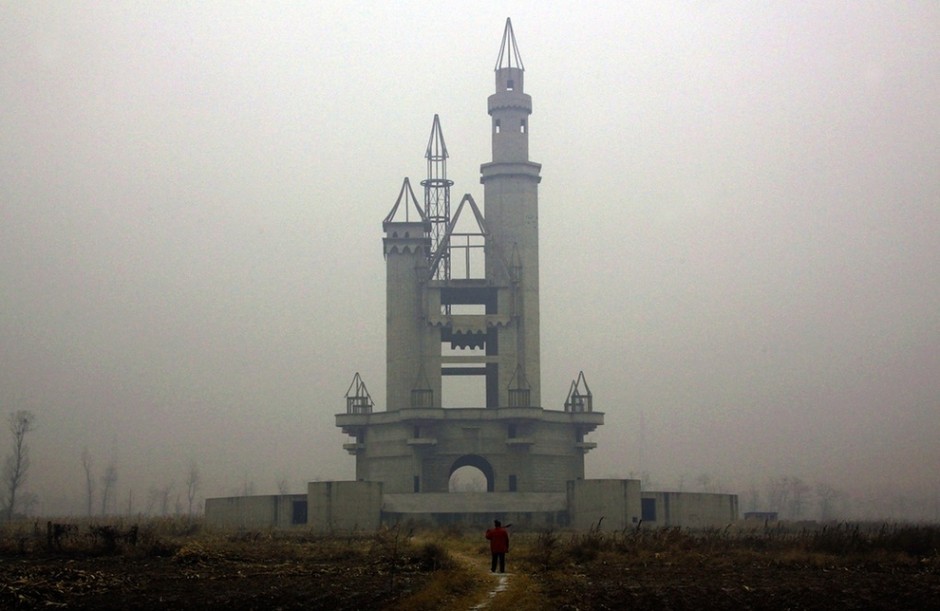
    Wonderland Amusement Park outside Beijing, China - 30 Abandoned Places that Look Truly Beautiful
    Image by David Gray / Getty Images

    6. Fishing hut, Germany

    Fishing Hut in Lake of Berchtesgaden National Park
    Fishing hut, Germany - 30 Abandoned Places that Look Truly Beautiful
    Via: onebigphoto.com

    7. Holland Island, Chesapeake Bay

    Holland Island is a marshy, rapidly eroding island in the Chesapeake Bay, in Dorchester County, Maryland, west of Salisbury. The island was once inhabited by watermen and farmers, but has since been abandoned. It is located in the Holland Strait, between Bloodsworth Island and Smith Island, six miles west of Wenona, Maryland.
    http://en.wikipedia.org/wiki/Holland_Island
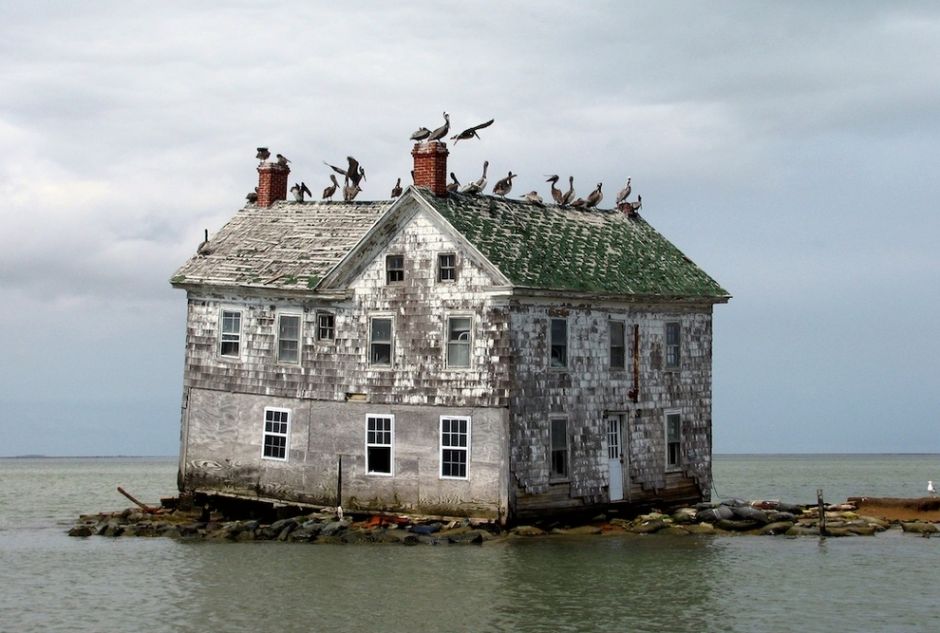
    Holland Island, Chesapeake Bay - 30 Abandoned Places that Look Truly Beautiful
    Via: baldeaglebluff

    8. The Kerry Way walking path between Sneem and Kenmare in Ireland

    The Kerry Way (Irish: Slí Uíbh Ráthaigh) is a long-distance trail in County Kerry, Ireland. It is a 214-kilometre (133-mile) long circular trail that begins and ends in Killarney. It is typically completed in nine days.It is designated as a National Waymarked Trail by the National Trails Office of the Irish Sports Council and is managed by Kerry County Council, South Kerry Development Partnership and the Kerry Way Committee. The Way circles the Iveragh Peninsula and forms a walkers’ version of the Ring of Kerry road tour. It is the longest of Ireland’s National Waymarked Trails.
    http://en.wikipedia.org/wiki/Kerry_Way
    The Kerry Way walking path between Sneem and Kenmare in Ireland - 30 Abandoned Places that Look Truly Beautiful
    Via: leiraenkai.deviantart.com

    9. Pripyat, Ukraine

    Pripyat (Ukrainian: При́п’ять, Pryp’yat’; Russian: При́пять, Pripyat’) is a ghost town near the Chernobyl Nuclear Power Plant, within the Chernobyl Exclusion Zone, part of Kiev Oblast (province) of northern Ukraine, near the border with Belarus.The city has a special status within the Kiev Oblast, being the city of oblast-level subordination (see Administrative divisions of Ukraine), although it is located within the limits of Ivankiv Raion. The city also is being supervised by the Ministry of Emergencies of Ukraine as part of the Chernobyl Exclusion Zone jurisdiction.
    Pripyat, Ukraine - 30 Abandoned Places that Look Truly Beautiful
    Via: reddit.com

    10. 15th century monastery, Black Forest, Germany

    The monastery was founded in 1084–85 in the Black Forest, by the source of the Brigach, against the background of the Investiture Controversy, as a result of the community of interests of the Swabian aristocracy and the church reform party, the founders being Hezelo and Hesso of the family of the Vögte of Reichenau, and the politically influential Abbot William of Hirsau. The intended site was initially to be at Königseggwald in Upper Swabia, but at William’s behest St. Georgen was chosen instead. The settlement, by monks from Hirsau Abbey, took place in the spring and summer of 1084; the chapel was dedicated on 24 June 1085.
    http://en.wikipedia.org/wiki/St._George%27s_Abbey_in_the_Black_Forest
    15th century monastery, Black Forest, Germany - 30 Abandoned Places that Look Truly Beautiful
    Via: abandonedography.com

    11. Kalavantin Durg near Panvel, India

    Kalavantin durg is situated aside the prabalgad,the pinnacle is in clouds during rains half of the time. The base village for the climb is Prabalmachi. A majestic trek and awesome place to visit during monsoon.
    Kalavantin Durg near Panvel, India - 30 Abandoned Places that Look Truly Beautiful
    Via: natureknights.net

    12. The remains of the Pegasus in McMurdo Sound, Antarctica

    Pegasus Field (ICAO: NZPG) is an airstrip in Antarctica, the southernmost of three airfields serving McMurdo Station. Pegasus is a blue ice runway capable of handling wheeled aircraft year-round, and the principal Ice Runway on the sea-ice available during the summer Antarctic field season. The other two are the snow runways at Williams Field that are limited to ski-equipped aircraft. The field is named afterPegasus, a C-121 Lockheed Constellation, still visible there in the snow after crashing in bad weather on October 8, 1970. No one on board was injured.
    http://en.wikipedia.org/wiki/Pegasus_Field
    The remains of the Pegasus in McMurdo Sound, Antarctica - 30 Abandoned Places that Look Truly Beautiful
    Via: panoramio.com

    13. Angkor Wat, Cambodia

    Angkor Wat (Khmer: អង្គរវត្ត) is the largest Hindu temple complex and the largest religious monument in the world. The temple was built by the Khmer King Suryavarman II in the early 12th century in Yasodharapura (Khmer: យសោធរបុរៈ, present-day Angkor), the capital of the Khmer Empire, as his state temple and eventual mausoleum. Breaking from the Shaivism tradition of previous kings, Angkor Wat was instead dedicated to Vishnu. As the best-preserved temple at the site, it is the only one to have remained a significant religious centre since its foundation – first Hindu, then Buddhist. The temple is at the top of the high classical style of Khmer architecture. It has become a symbol of Cambodia,appearing on its national flag, and it is the country’s prime attraction for visitors.
    http://en.wikipedia.org/wiki/Angkor_Wat
    Angkor Wat, Cambodia - 30 Abandoned Places that Look Truly Beautiful
    Via: theglobalpanorama.com

    14. The Maunsell Sea Forts, England

    The Maunsell Forts were small fortified towers built in the Thames and Mersey estuaries during the Second World War to help defend the United Kingdom. They were named after their designer, Guy Maunsell. The forts were decommissioned in the late 1950s and later used for other activities. One became the Principality of Sealand; boats visit the remaining forts occasionally, and a consortium called Project Redsands is planning to conserve the fort situated at Redsand.
    http://en.wikipedia.org/wiki/Maunsell_Forts
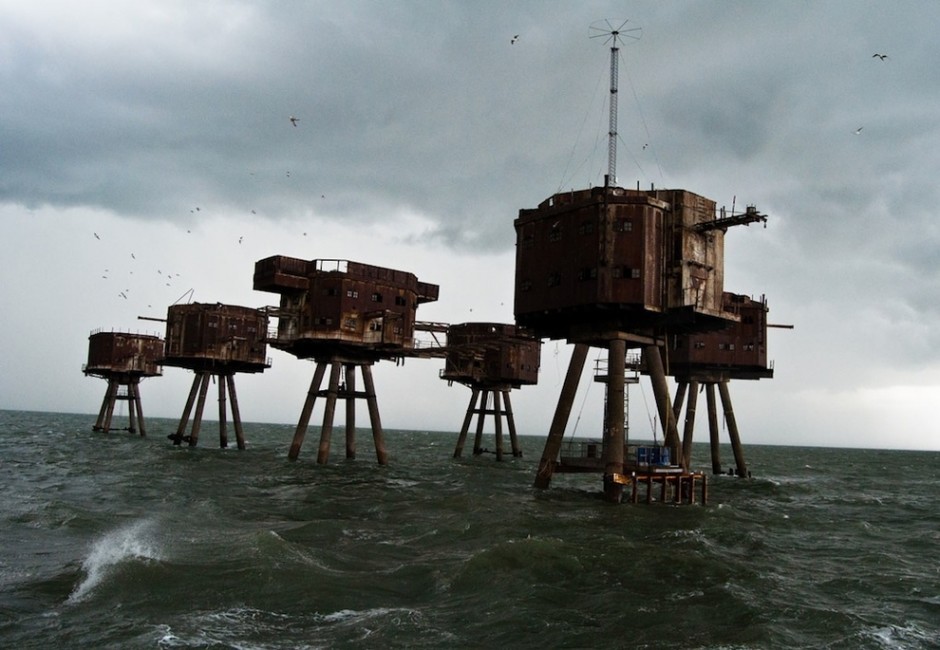
    The Maunsell Sea Forts, England - 30 Abandoned Places that Look Truly Beautiful
    Via: fivelightsdown.squarespace.com

    15. Bodiam Castle, East Sussex, England

    Bodiam Castle is a 14th-century moated castle near Robertsbridge in East Sussex, England. It was built in 1385 by Sir Edward Dalyngrigge, a former knight of Edward III, with the permission of Richard II, ostensibly to defend the area against French invasion during the Hundred Years’ War. Of quadrangular plan, Bodiam Castle has no keep, having its various chambers built around the outer defensive walls and inner courts. Its corners and entrance are marked by towers, and topped by crenellations. Its structure, details and situation in an artificial watery landscape indicate that display was an important aspect of the castle’s design as well as defence. It was the home of the Dalyngrigge family and the centre of the manor of Bodiam.
    http://en.wikipedia.org/wiki/Bodiam_Castle
    Bodiam Castle, East Sussex, England - 30 Abandoned Places that Look Truly Beautiful
    Via: commons.wikimedia.org

    16. Czestochowa, Poland’s abandoned train depot

    Czestochowa, Poland’s abandoned train depot - 30 Abandoned Places that Look Truly Beautiful
    Via: nedhardy.com

    17. Sunken yacht, Antarctica

    In April, a 76-foot Brazilian yacht named Mar Sem Fin (Endless Sea) sank off the coast of Antarctica, likely due to ice compression and strong winds. Four crew members were rescued from the yacht, which is owned by Brazilian journalist João Lara Mesquita, who was in the region producing a documentary, according to MercoPress.
    http://au.businessinsider.com/photo-of-a-sunken-yacht-in-antarctica-2012-8
    Sunken yacht, Antarctica - 30 Abandoned Places that Look Truly Beautiful
    Via: ruschili.35photo.ru

    18. Abandoned distillery, Barbados

    Abandoned distillery, Barbados - 30 Abandoned Places that Look Truly Beautiful
    Source: i.imgur.com / via: reddit.com

    19. Michigan Central Station, Detroit

    Michigan Central Station (also known as Michigan Central Depot or MCS), built in mid-1912 through 1913 for the Michigan Central Railroad, was Detroit, Michigan’s passenger rail depot from its opening in 1913 after the previous Michigan Central Station burned, until the cessation of Amtrak service on January 6, 1988. At the time of its construction, it was the tallest rail station in the world.
    http://en.wikipedia.org/wiki/Michigan_Central_Station
    Michigan Central Station, Detroit - 30 Abandoned Places that Look Truly Beautiful
    Source: i.imgur.com

    20. 1984 Winter Olympics bobsleigh track in Sarajevo

    Sarajevo Olympic Bobsleigh and Luge Track is bobsleigh and luge track situated on Trebević mountain overlooking the City of Sarajevo, built for 1984 Winter Olympics.
    http://en.wikipedia.org/wiki/Sarajevo_Olympic_Bobsleigh_and_Luge_Track
    1984 Winter Olympics bobsleigh track in Sarajevo - 30 Abandoned Places that Look Truly Beautiful
    Source: flickr.com

    21. Craco, Italy

    Craco is an abandoned commune and medieval village located in the Region of Basilicata and the Province of Matera in Italy. About 25 miles inland from the Gulf of Taranto at the instep of the “boot” of Italy. It is typical of the hill towns of the region with mildly undulating shapes and the lands surrounding it sown with wheat. It was abandoned in 1963 due to recurring earthquakes.
    http://en.wikipedia.org/wiki/Craco
    Craco, Italy - 30 Abandoned Places that Look Truly Beautiful
    Source: i.imgur.com / via: reddit.com

    22. Russian military rocket factory

    These incredible pictures were taken by a young Russian woman after she crept inside a factory belonging to one of the world’s top manufacturers of liquid-fuel rockets. Lana Sator found her way into one of NPO Energomash’s huge factories outside the Russian capital Moscow, without coming across a single security guard – or indeed any other employees at all.
    Read more: DailyMail
    Russian military rocket factory - 30 Abandoned Places that Look Truly Beautiful
    Source: lana-sator.livejournal.com / via: i.imgur.com

    23. Abandoned mill from 1866 in Sorrento, Italy

    The Valley of the Mills, “The name Valley of the Mills, derives from the existence of a mill – functioning since the beginning of the ’900′s – used for grinding wheat. Attached to the mill, rose a sawmill which furnished chaff to the Sorrentine cabinet makers. Everything is completed by a public wash-house used by the women. The creation of Tasso Square, since 1866, determined the isolation of the mill area from the sea, provoking a sharp rise of the percentage of humidity, which made the area unbearable and determined its progressive abandon.”
    http://ngm.nationalgeographic.com/ngm/photo-contest/2012/entries/167692/view/
    Abandoned mill from 1866 in Sorrento, Italy - 30 Abandoned Places that Look Truly Beautiful
    Source: logicalrealist / via: i.imgur.com

    24. Cooling tower of an abandoned power plant

    Photographer Richard Gubbels out of Utrecht, Netherlands shot these amazing photos inside the cooling tower of an abandoned power plant.
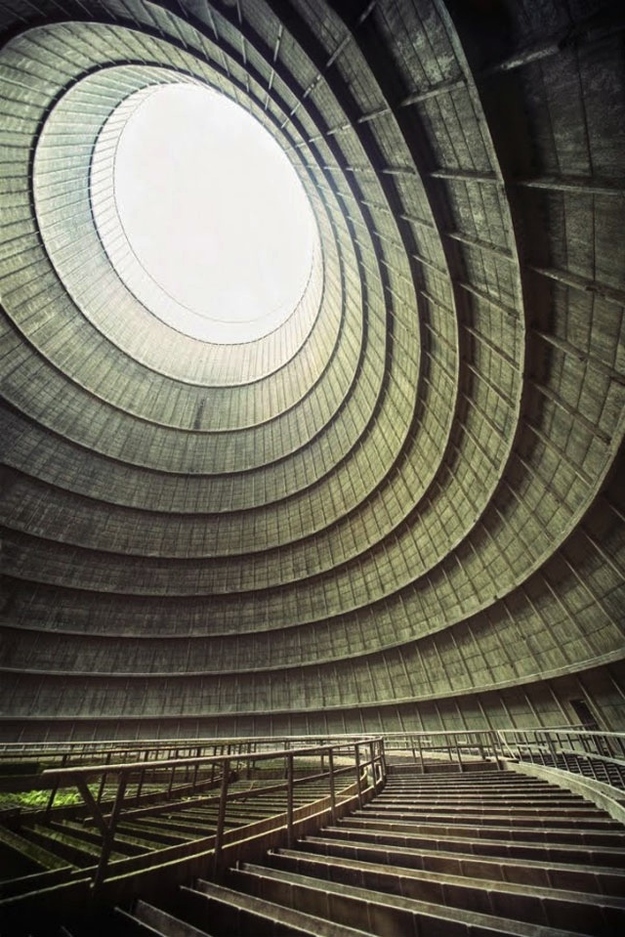
    Cooling tower of an abandoned power plant - 30 Abandoned Places that Look Truly Beautiful
    Source: flickr.com / via: i.imgur.com

    25. House of the Bulgarian Communist Party

    The House of the Bulgarian Communist Party was built in another era, however, one that long ago crumbled along with the way of life it embodied. After the fall of the Iron Curtain in 1989, Bulgaria moved into a new age of parliamentary democracy.
    http://www.dailymail.co.uk/news/article-2117506/Monument-troubled-past-Inside-crumbling-communist-HQ-Bulgaria-afford-maintain-demolish.html
    House of the Bulgarian Communist Party - 30 Abandoned Places that Look Truly Beautiful
    Image by Dimitar Kilkoff / Getty Images

    26. Abandoned city of Keelung, Taiwan

    Abandoned city of Keelung, Taiwan - 30 Abandoned Places that Look Truly Beautiful
    Source: flickr.com / via: i.imgur.com

    27. Lawndale Theater, Chicago

    When the Lawndale Theater of North Lawndale, IL closed permanently in the mid 2000s, it had been in use primarily as a church. The balcony was sealed off from the main level when the theater was converted into a church.
    http://afterthefinalcurtain.net/2011/07/19/lawndale-theatre/
    Lawndale Theater, Chicago - 30 Abandoned Places that Look Truly Beautiful
    Source: ebow.org

    28. North Brother Island near New York City, New York

    North Brother Island is an island in the East River situated between the Bronx and Riker’s Island. Its companion, South Brother Island, is a short distance away. Together, the two Brother Islands, North and South, have a land area of 20.12 acres (81,400 m2).
    http://en.wikipedia.org/wiki/North_Brother_Island,_East_River
    North Brother Island near New York City, New York - 30 Abandoned Places that Look Truly Beautiful
    Source: ny.curbed.com

    29. El Hotel del Salto, Colombia

    Tequendama Falls (or Salto del Tequendama) is a major tourist attraction about 30 km southwest of Bogotá, the capital city of Colombia. The thousands of tourists who visit the area to admire the 157 metre (515 feet) tall waterfall and the surrounding nature, make a stop at another nearby landmark as well, the abandoned Hotel del Salto. The luxurious Hotel del Salto opened in 1928 to welcome wealthy travelers visiting the Tequendama Falls area. Situated just opposite to the waterfall and on the edge of the cliff, it provided a breathtaking view to its guests. During the next decades though, Bogotá river was contaminated and tourists gradually lost their interest to the area. The hotel finally closed down in the early 90′s and was left abandoned ever since. The fact that many people in the past chose that spot to commit suicide, made others believe that the hotel is haunted.
    http://desertedplaces.blogspot.com/2012/08/the-haunted-hotel-at-tequendama-falls.html
    El Hotel del Salto, Colombia - 30 Abandoned Places that Look Truly Beautiful
    Source: alveart

    30. Nara Dreamland, Japan

    Nara Dreamland (奈良ドリームランド Nara Dorīmurando) was a theme park near Nara, Japan which was built in 1961 and inspired by Disneyland in California. On August 31, 2006, Nara Dreamland closed permanently.
    http://en.wikipedia.org/wiki/Nara_Dreamland
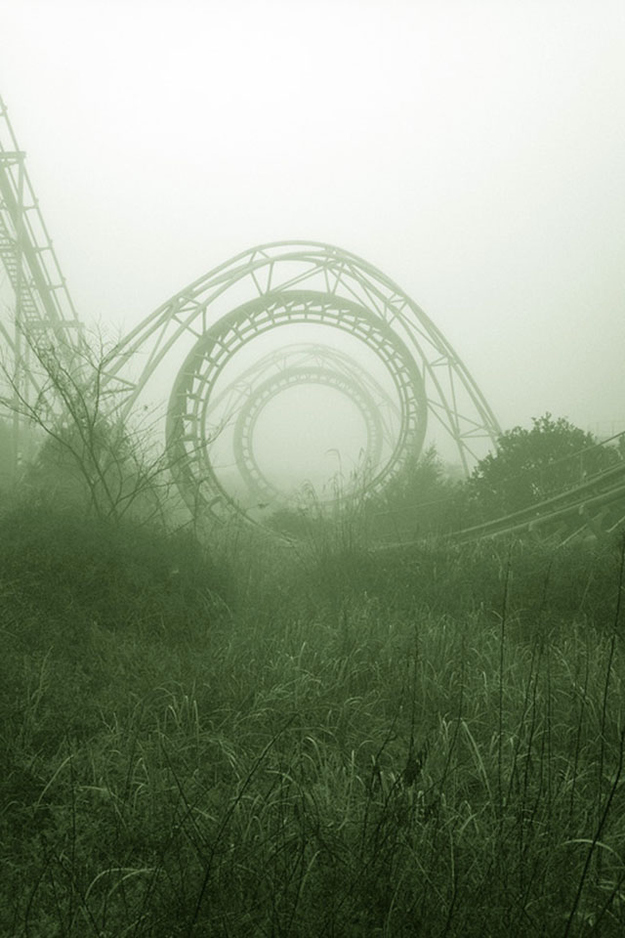
    Nara Dreamland, Japan - 30 Abandoned Places that Look Truly Beautiful

    Source: steampunkopera.files.wordpress.com