My Blog List
-
-
Photo Post: Konica Auto S1.6 - This is the final photo post for today, but I have loads more things to catch up on. I haven’t… Read more Photo Post: Konica Auto S1.62 days ago
-
On Concrete Remnants of London’s Aylesbury Estate, Harriet Mena Hill Preserves a Community - [image: On Concrete Remnants of London’s Aylesbury Estate, Harriet Mena Hill Preserves a Community]Harriet Mena Hill is devoted to documenting a communit...4 days ago
-
Brightinstar 50mm f0.95 殘幅版星曜夜神 - 星曜 Brightinstar 50mm f0.95 殘幅版的外型設計比全片幅版本好,如回此鏡的大小和外觀,是一支全片幅鏡頭該多好。 可惜,世界沒有如果。 入手的是FX版本,即插上FUFJIFILM XPRO 3 試一下。 這外觀和XPRO3太匹配了,拿上手都覺得時當,算是這年頭少見用心的國產鏡...5 days ago
-
James Payne – Stories from American Portraits - Review by Hans Hickerson · When is less more and when is it less? When do fewer images in a photobook result in a better viewing experience, and when are m...2 weeks ago




Wednesday, September 24, 2014

Saturday, September 6, 2014
1950s Hong Kong Captured In Street Photography By Fan Ho
Critically acclaimed Chinese photographer Fan Ho spent the 1950s and 60s taking gritty and darkly beautiful photos of street life in Hong Kong. His photographs, to be published in his new book “Fan Ho: A Hong Kong Memoir“, reach back through time and space to connect us to the everyday sights of this bustling metropolis in a way that many of us have never seen before.
Ever since Ho moved to Hong Kong from Shanghai in 1949, he has been documenting these special everyday moments. But the challenges (and superstitions) he faced then were quite different from those faced by photographers today; “With a knife in his hand, a pig butcher said he would chop me. He wanted his spirit back,” Ho told the South China Morning Post.


Friday, September 5, 2014
中国当代摄影2009-2014》9月5日开幕
《


中国当代摄影2009-2014
展期:2014.9.1-10.15
总策划:王璜生
总顾问:艾民
策展团队:顾铮、李媚、翁云鹏、荣荣、蔡萌
主办:上海民生现代美术馆、中央美术学院美术馆
协办:PHOTO SHANGHAI
参展艺术家:刘勃麟、王宁德、王庆松、缪晓春、胡介鸣、杨泳梁、叶甫纳、孙略、刘辛夷、刘铮、骆丹、蒋鹏奕、邸晋军、邵文欢、塔可、魏壁、丘、付羽、储楚、张克纯、於飞、郑川、线云强、倪卫华、郑知渊、王国锋、封岩、李俊、戴建勇、朱浩、游莉、严明、张晓、孙彦初、朱岚清、黎朗、刘瑾、邢丹文、任航、曲艺、张巍、严程、马良、杨福东、李政德、李郁+刘波、区志航、谢至德、王久良、卢广、姚瑞中+LSD、张大力
上海民生现代美术馆即将推出的摄影群展《中国当代摄影2009-2014》,展出52位/组艺术家的摄影、装置及影像作品,贯穿美术馆的整个一楼展厅,是一次对中国当代摄影的梳理与集中展示。本次展览集中呈现了最切近当下的摄影实践,并加以探讨、鼓励摄影的语言探索与观念推进,进而推动中国当代摄影发展。展览由上海民生现代美术馆与中央美术学院美术馆联袂策划,PHOTO SHANGHAI协办,将于9月5日开幕,展期至10月15日。
展览共设三大单元,依次为“边界/漂移”、“景观/日常”及“社会/身体”。策展团队希望从议题出发来设置单元,以此突现出某些较为明显的趋势,同时也希望这样的单元设置,能够更为清晰地梳理、展现2009年至2014年间中国当代摄影发展的大致脉络与走向,给出一个相对宏观却又不失具体性的描述。当然,三个单元无法全面涵盖中国当代摄影,而艺术家的创作也往往跨越了多个议题,不能用特定议题框定。
第一单元“边界/漂移”中,大部分艺术家注重影像本体语言的实验,还有一些艺术家则尝试如何以新媒体的方式来呈现与思考现实。在第二单元“景观/日常”里,通过凝视与反思空间景观,艺术家在以摄影方式接受现实的多样性、诚实面对历史发展的阶段性与不平衡性的同时,也对当下景观展开富于主体性的“观景”实验。身体作为当代摄影的关键词,以各种方式出现在第三单元“社会/身体”艺术家的作品中。社会加诸于人的身体的压力,如何成为一种反作用力作用于摄影这个媒介,并且被摄影再度转换为一种更深远的力量来影响当代的身体现实与社会现实,始终吸引着艺术家。第三单元还特设了“公民新闻”板块,集中梳理了2009年以来一段时期内流布于社交媒介中的图像新闻,既让它们作为新闻生产方式本身加以呈现,也让它们与本单元中的新闻报导实践构成某种对话。
上海民生现代美术馆创建于2008年,2010年正式对外开放,一直致力于推动中国当代艺术的发展,积极反映中国当代艺术的潮流和现状。本次展览是美术馆为推动中国当代摄影发展,对当下的摄影实践及其发生的变化进行的一次系统而集中的展现。展览将持续至10月15日。
(编辑:刘颖娜
Sunday, August 31, 2014
10 Contemporary Chinese Photographers You Should Know
In 1990s China, avant-garde artists started to experiment with the photographic medium, veering away from the officially accepted documentary and socialist style to embrace photography as a channel for artistic self-expression. The New Photography movement saw artists explore issues of self, personal and collective memory, history and tradition and modernity in a country traumatised by rapid development. This legacy continues, and we give you ten of the best photography practitioners in China today.

Wang Qingsong
Wang Qingsong (b. 1966, Heilongjiang Province - based in Beijing), trained in painting, creates digitally enhanced photographs based on surrealistic, staged scenes that comment on universal social conflicts. Wang has observed his country morph from an insular, rural nation to an economic giant, living through events that shook the country like the Cultural Revolution. A witness to such shifts, the explained that 'it is very meaningless if an artist only creates art for art's sake', as the dramatic transformations in China have created social contradictions, huge constant construction sites and hard life scenarios. 'I think it would be absurd for an artist to ignore what's going on in society' he says. Wang's photographs depict vice, ironicise religion and the idolatry of status symbols or of consumerism. One of his most conceptually complex works, 'Night Revels of Lao Li', is based on Gu Hongzhong's scroll painting 'Night Revels of Han Xizai' (ca. 970). In his 31-foot-long reinterpretation, Wang comments on the marginalisation of intellectuals in modern society and presents hedonism as both a form of protest and the best available consolation for the powerless.
Rong Rong and Inri
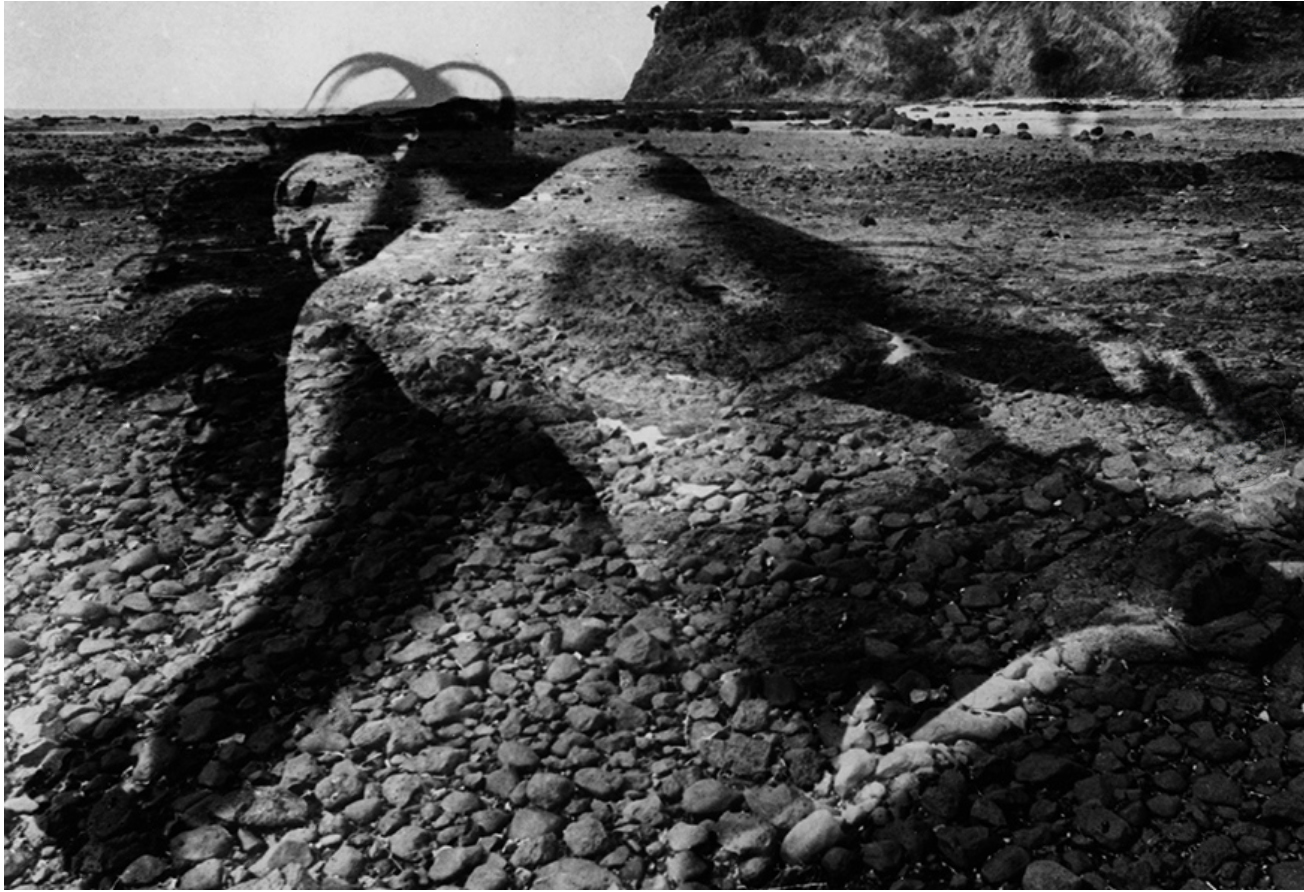
Rong Rong (b. 1968, Fujian Province, China) and Inri (b. 1973, Kanagawa Prefecture, Japan) are a husband and wife artist duo whose practice centres around photography with a performative element. They started collaborating when they met in 2000 in China. Their trademark photographic style depicts the artist duo, their bodies naked in extreme, stunning environments, like deserted landscapes, ruins and vast empty expanses. The duo is renowned for the poignancy and lyricism of their work, which poses questions and explores the relationship between the human body and the environment, be it natural or urban. Among their most well-known series are Mt. Fuji, In Nature and Liulitun. The latter documented the couple's life in Liulitun Village, near Beijing, and a symbolic, silent funeral they held for their habitat, which was slated to be demolished like the East Village. In 2007, Rong Rong and Inri founded the Three Shadows Photography Art Centre, the first Chinese art space dedicated exclusively to photographic and video art.

Yang Fudong
Yang Fudong (b. 1971, Beijing – based in Shanghai) is a photographer and video artist whose works expose the contradictions of modern Chinese society. In his works, he adopts a multiple perspective to investigate the structure and formation of identity through myth, personal memory and lived experience. Yang talks about the human condition and portrays the young generation, confused between past and present influences, as a reaction to China's rapid modernisation and the increasing loss of traditional culture. Although set in contemporary urban China, his portraits recall the composition of classical literati paintings. In his early work The First Intellectual (2000), Yang explores the confusion of the urban intellectual vis-à -vis contemporary life after the reforms. Yang says the work 'is the expression of a psychological condition of confusion as a result of materialism and the situation of the individual in a big city. It is about somebody who gets hurt, but he does not know where the injury comes from.'

Wang Guofeng
Wang Guofeng (b. 1967, Liaoning Province, China) creates monumental photographs with minute details sharply visible in the vast subjects he depicts, influenced by his training in painting. Wang's series of photographs of socialist buildings and architecture in Russia, China and Germany explore the ideology they represent, their common inspiration and the national histories that illustrate their symbolic power. Ideality, his series of public monumental architecture in China from the 1950s combining traditional Chinese architecture with Western styles and Soviet Communist models, reflect some of the contradictions of modern China. They include both the collective mentality of the Chinese intelligentsia as well as nationalistic consciousness and socialist ideals. Often devoid of people except for himself in Maoist attire, Wang's photographs are not retouched but composed of multiple shots stitched together to give a panoramic view of the subject.

Shao Yinong and Mu Chen
Shao Yinong (b. 1961, Liaoning) and Mu Chen (b. 1970, Qinghai) are ahusband and wife artist duo based in Beijing who create photographs referencing the different facets and functions of memory. Their eerie images of the interior of buildings now in ruins portray the effects of the transformation of China from an agrarian society to the rapidly modernised, urbanised and consumerist environment it is today. The series entitled Assembly Halls (2005) is a poignant example of these transitions and depicts various empty halls renovated or still in degradation that were annexed for official political meetings during the Cultural Revolution. The abandoned and rehabilitated structures somehow symbolise and mirror the individuals who have experienced the changes through extreme political turmoil and rapid modernisation. All portrayed in emptiness, devoid of human presence, they are ghostly depictions of the affect of history and the powerful presence of memory. Representing both personal and collective memory, these images are nostalgic and charged with historical intensity.

Liu Zheng
Previously a news journalist, in the 1990s Liu Zheng (b. 1969, Wuqiang Hsien, Hebei Province, China) started to experiment and veer away from the official documentary style, embarking on an analysis of culture through a broad range of imagery that wasn't restricted to a socialist aesthetic and ideology. Addressing Chinese society and culture and the variety of issues surrounding them, Liu's works are based on his profound impressions of his country's 5000-year-long history. His works expose links between photography, memory and reality. Liu portrays China and Chinese culture, probing into their history, their remains, their influences, their transformations. His series The Chinese depicts people from all walks of contemporary society, including himself, convicts, monks, workers, villagers, artists and Beijing opera singers. The subjects pose maliciously, awkwardly portraying an absurd and yet recognisable reality, where fantasy, romanticism and realism become inseparable.

Weng Fen
Weng Fen (b. Weng Peijun, 1961, Hainan) is inspired by the transitions and transformations that have taken place in China since its opening up in the 1980s. His earlier works, such as the series Sitting on a Walland Bird's Eye View,feature lyrical images of epic landscapes that bring into focus the rise of urbanism and modernisation in Chinese cities. First he positions his subjects as outsiders gazing and observing these changes with curiosity; Weng then shifts inwards, towards a more emotional response or reaction. In many of his series, Weng portrays people with their back turned to the camera, usually schoolchildren in uniform, staring in the distance, still, such as in Staring at the Lake(2007). The children represent a new beginning in the search for that utopia, which might exist, still, beyond that silent body of water. Constantly evolving, Weng addresses issues of travelling, migration and globalisation affecting China and its people.
Cui Xiuwen
Cui Xiuwen (b. 1970, Harbin, Heilongjiang) is a photography and video artist who made headlines in China's contemporary art world when her installation 'Lady's Room' (2000) provoked the first lawsuit in the history of Chinese contemporary art. The work consisted of a video taken with a hidden camera in the lady's restroom of a Beijing nightclub and shows footage of hookers counting money and preparing for the next client. Since the beginning of her career, Cui has focused on taboo issues of sexuality, feminism and gender roles in China, and explores the struggles of young women growing up in big cities and the harsh life that women take up in China's mad economic growth. Somehow the artist reflects on the situation of young women in China through a subtle self-portraiture. In her latest work Existential Emptiness (2009), the artist poses with an artificial alter ego in the snowy landscapes of Northern China, putting in contrast the Western concept of existential emptiness, a void to be dreaded, and Eastern philosophy's emptiness as finding one's origins and becoming one with nature, achieving a higher plane of consciousness.

Li Wei
Li Wei (b. 1970, Hubei) creates photographs based on his performances often depicting him in gravity defying situations that pose him and other in threatening and dangerous scenarios. His photographs are not the result of digital manipulation, but are produced with acrobatics and the aid of props such as scaffolding, mirrors and metal wires. Li came to prominence with his performance Falls, in which he stuck himself through a group like a missile, wanting to portray the modern man's desire to hide from daily problems. His series Fall (2002) portrays him falling into the ground, a body of water or a car, head first with his legs and feet sticking up at unnatural angles. Li references the malaise of finding oneself in situations that are out of one's control, driven by higher, more powerful forces, such as politics, economy and social pressure. Li describes it thus: 'this feeling of having fallen headfirst into something and of having nothing firm under the feet is familiar to everyone. One doesn't have to fall from another planet to feel it.'

Hong Lei
Hong Lei (b. 1960, Chaozhou, Jiangsu) describes his practice as roaming 'within 5,000 years of civilization, dreaming a sad dream so that I can escape the turmoil of reality. I hereby proclaim that I am terrified of globalisation and abhor it.' Hong's images subvert reality and create surreal, anachronistic scenes that weave reality, imagination, traditional and contemporary imagery together, commenting on the traumatic changes of modern China. Hong's compositions are inspired by his training in classical Chinese paintings and literary works such as The Dream of the Red Mansions and The Gold Plum Vase. In 1996, he drew the attention of critics for a photo of his installation Chinese Box, in which a dead bird lay in a jewellery box filled with pearls, gems and other precious treasures. Hong then started photographing classical Chinese works of art to express anxiety about the conflicts between tradition and modernity. In his series Forbidden City, Hong took photographs of a dead bird in the imperial palace grounds, evoking the past grandeur and present weakness of traditional culture over its 5000 years of history. Hong said: 'Over time, I have come to see the dead bird as the embodiment of my own self.'
By C. A. Xuan Mai Ardia
Wednesday, August 27, 2014

Subscribe to:
Posts (Atom)