My Blog List

Friday, March 20, 2015

【攝影必學】白平衡使用技法 - 顏色取向對相片的重要影響

(作者:)

DSC_0822
善用相機的白平衡,可以拍出更具渲染力的相片!

在現代的數碼攝影世界裏,改變相片的顏色很容易,其中一個方法便是控制相機的白平衡(White Balance)來達到目的,很多初學攝影的同學往往只會把白平衡設定為自動,導致忽略了白平衡對相片顏色的影響,現在便讓筆者透過這篇文章來簡單介紹一下在實戰中設定白平衡的要訣吧!

↓↓分享給朋友↓↓

相機的白平衡是甚麼?

白平衡 (White Balance) 為控制相片色溫/顏色的設定,跟相片的亮度/曝光沒有關係,一張相同曝光的相片,可以有著偏冷或偏暖的顏色,產生不同的感覺。色溫的單位為Kelvin,在相機會顯示為「K」,留意這不是代表 1,000 的K,很多同學也錯誤翻譯 4000K 為 4,000,000,這樣是不正確的啊!

一般相機內置白平衡的種類

一般相機也會有多種內置的白平衡,例如:自動白平衡、鎢絲燈、晴天、陰天、閃光燈等,進階一點的相機也會有自訂K數或白訂白平衡相片的選項。
在大白天利用預設的「日光」白平衝便可以顯示出正確的顏色了!

怎樣於相機設定白平衡

通常在相機你會發現一個叫「WB」的按扭,按下並轉動轉盤便可以調較,但有些相機必須到Menu內才可更變,若果不懂請參考相機的說明書。於一些相機你也可以設定白平衡的K值,例如設定為低K值(如2700K)便是告訴相機現在的場景偏暖,請相機替你把相片加強冷色調,因此出來的相片會是比現場偏冷的效果。很多同學也誤會了設定K值是直接設定相片的冷/暖色,其實剛剛相反,一定要留意!
1
相機的「WB」按鈕可以讓你快速調較白平衡。

拍攝場境用那一個白平衡的例子

以下為筆者個人偏好的白平衡設定例子,各位可以作為一個參考:
題材白平衡設定效果原因例子
日間風景5000K
(日光)
正常保持景物在陽光下的正常顏色sample1
夜景(城市/建築)3000-4700K
(鎢絲燈)
偏冷帶來晚上安靜、冷調的感覺sample2
夜景(節日)5000-7000K
(閃光燈)
偏暖如聖誕、新年,可以顯示開心溫暖的氣氛sample3
活動4000-5000K
(日光)
正常偏冷正常顏色(除非有外來顏色光源)sample4
紀實4000K偏冷偏冷帶來電影感sample5
秋天5000-7000K偏暖顯示溫暖的感覺sample6
日出3000-5000K偏冷保持天亮前的顏色,顯示太陽即將升起sample8
日落5500-8000K偏暖日落帶來溫暖的感覺sample7
星空2700K偏冷個人喜好,帶出黑夜偏冷的感覺sample9
各位留意以上的只是一些參考,有時按實際場景和想表達的氣氛所設定的白平衡也會不同,各位可以多作嘗試。

更多範例相片

2
▲從以上相片可以看到,相機設定為 3000K 的白平衡會讓相片帶來更陰森的感覺,而 5000K 正常日光便能反映出實況。
3
▲這張相片若果在WB白平衡設定為6600K,便可以帶出更「金壁輝煌」的氣氛,可見顏色對相片感覺有著重大的影響。

6個每日小練習,讓你攝影技巧更進步

6個每日小練習,讓你攝影技巧更進步


常常說攝影要多練習才可以進步,那麼有沒有甚麼步驟可以按著來做,使攝影技巧更容易提升呢?這裏有 6 個每日小練習,各位不妨可以參考一下!
(一) 學習使用單點測光 (Spot Metering)
大部分相機出廠時也會調較到使用「全區測光」,即是拍攝相片時相機會根據當時環境的全部光和暗位來計算應該使用的曝光值,這個方法在一般的拍攝環境下很有用,但是當你在拍攝一些大面積的黑或白色(例如演唱會、雪地、有射燈的地方等)相機便會「被騙」而作出錯誤的判斷,這時有兩個方法,一個是利用相機的「曝光補償 +/-EV」按鈕,二是使用不同的測光方法。前者比較容易理解,但有時四周光暗變化很大,每次也利用+/-EV來微調便變得不實用,因此各位新手可以學習使用「單點測光」方法,設定後相機只會在「對焦點」的極小範圍作測光,非常適合在相片某一點位置需準確測光時使用,例如演唱會中的歌手,無論四周是光是暗,歌手的臉也應該曝光正常。

用了單點測光,對焦的地方會曝光正常。(網上圖片)
(二) 習慣拍照後檢查直方圖 (Histogram)
在攝影新手訓練班,同學們會學到這個非常有用的功能 - 直方圖 (Histogram),透過觀察直方圖的左右部分,它可以準確地告訴你相片是否有過曝或曝光不足的情況發生,這樣拍照後便不用單靠屏幕的相片作判斷而出錯了(尤其是在戶外下根本上很難看清楚到相片)。

Histogram直方圖很有用,可以看到相片的曝光情況。(網上圖片)
(三) 使用定焦鏡頭來拍攝
大部分初學攝影的同學也是使用變焦鏡頭,但其實定焦鏡頭有很多好處,除了輕巧、質素高,價錢平宜外,同學也可以多學習走動去尋找有趣的角度,從而發掘更好的拍攝題材。而因為很多定焦鏡鏡頭體積細小,攜帶時十分方便,也增加了隨身帶備相機練習的興趣,對構圖、尋找攝影題材等也有很大的好處!

圖為Nikon的定焦鏡頭。(Photo by 55Laney69)
(四) 改變白平衡
顏色對於相片有著很大的影響!一張不同顏色的相片,可以令整個故事改變,因此不要再盲目使用「自動白平衡」,多點試試相機內罝的各種白平衡設定吧,用過以後你可能會愛上設定白平衡呢!但對於白平衡,要留意一點的是相機的白平衡名稱代表現場環境的光源,從而讓相機「改正」過來,很多同學也以為在相機設定「鎢絲燈」便是讓相片變成暖色調(像鎢絲燈的顏色),其實是錯誤的,出來的效果反而是相反,令相片偏向冷調,各位要加緊留意啊!有些中階或高階的相機更可以讓你直接輸入白平衡的K值,對於控制顏色便更加方便了,同學們可以多加利用。

透過白平衡可以改變相片的顏色,增加衝擊力!(Photo by A Moment To Remember)
(五) 利用手動模式 (M-mode) 來拍攝
若果你有閱讀「簡單易用的拍攝模式 - 光圈先決」一文,你會發現光圈先決模式真的又方便又好用,但在一些情況下「手動模式」才是王道!手動模式 (M-mode) 可以讓你完全掌握光圈、快門、ISO等設定,在拍攝夜景、流水、車軌,或是一些光差變化大的場合很好用,懂得利用手動模式去拍攝,你的攝影技巧一定有所進步!

透過手動模式,讓你拍出更多攝影的題材。
(六) 每天分享一張相片
拍下了一大堆相片,很容易把自己困在一個模式內,不妨每天也在 Facebook、Twitter、Instagram等社交媒體跟朋友分享一張相片,讓他們評價或發表個人意見,很有可能可以激發你的創作力,讓攝影的層次向前邁進!

分享相片到社交媒體有機會激發你的創意啊!

Wednesday, January 28, 2015

10 Contemporary Chinese Photographers You Should Know


In 1990s China, avant-garde artists started to experiment with the photographic medium, veering away from the officially accepted documentary and socialist style to embrace photography as a channel for artistic self-expression. The New Photography movement saw artists explore issues of self, personal and collective memory, history and tradition and modernity in a country traumatised by rapid development. This legacy continues, and we give you ten of the best photography practitioners in China today.

Wang Qingsong
Wang Qingsong, Dormitory, 2005, C-print | Courtesy Pékin Fine Arts


Wang Qingsong

Wang Qingsong (b. 1966, Heilongjiang Province - based in Beijing), trained in painting, creates digitally enhanced photographs based on surrealistic, staged scenes that comment on universal social conflicts. Wang has observed his country morph from an insular, rural nation to an economic giant, living through events that shook the country like the Cultural Revolution. A witness to such shifts, the explained that 'it is very meaningless if an artist only creates art for art's sake', as the dramatic transformations in China have created social contradictions, huge constant construction sites and hard life scenarios. 'I think it would be absurd for an artist to ignore what's going on in society' he says. Wang's photographs depict vice, ironicise religion and the idolatry of status symbols or of consumerism. One of his most conceptually complex works, 'Night Revels of Lao Li', is based on Gu Hongzhong's scroll painting 'Night Revels of Han Xizai' (ca. 970). In his 31-foot-long reinterpretation, Wang comments on the marginalisation of intellectuals in modern society and presents hedonism as both a form of protest and the best available consolation for the powerless.

Rong Rong and Inri

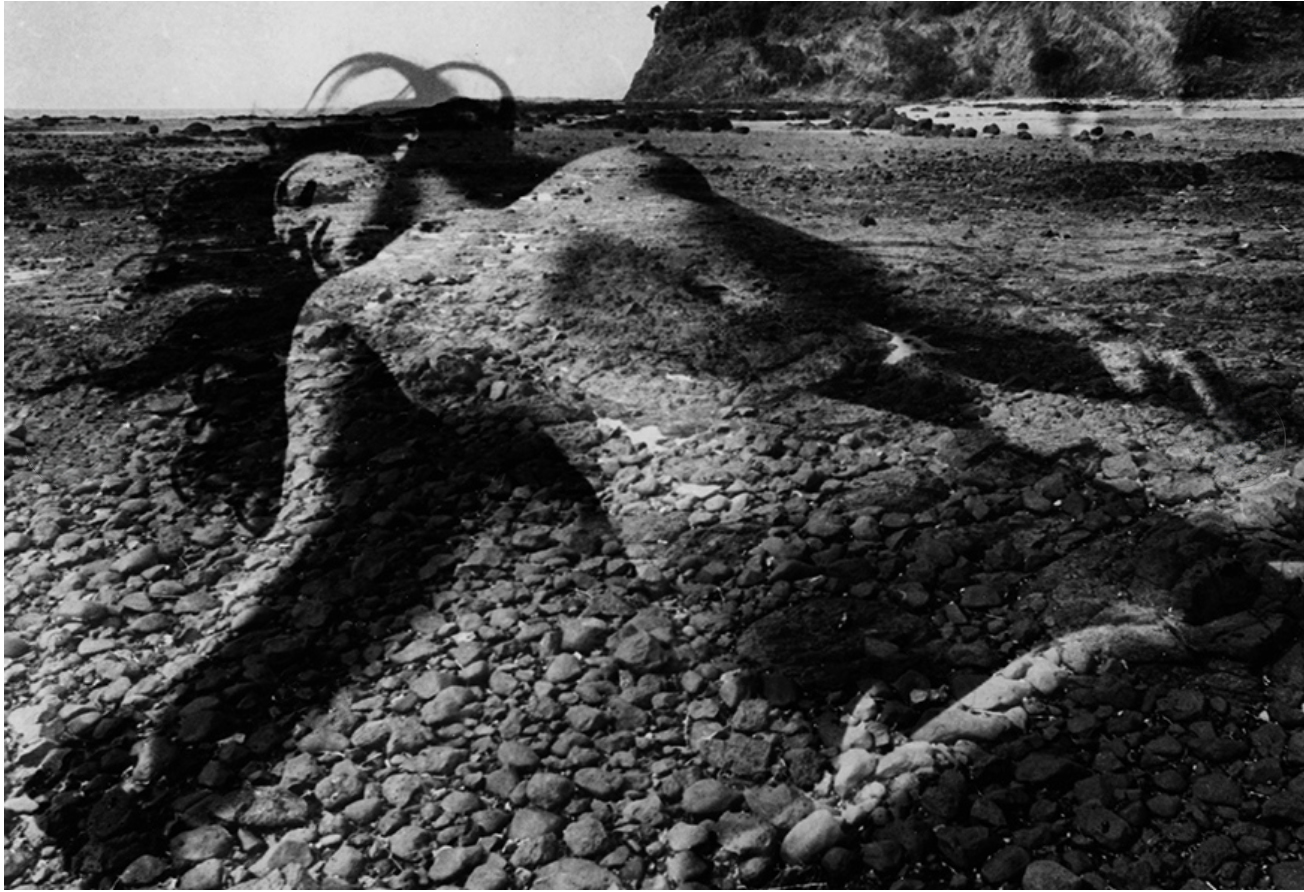
Rong Rong (b. 1968, Fujian Province, China) and Inri (b. 1973, Kanagawa Prefecture, Japan) are a husband and wife artist duo whose practice centres around photography with a performative element. They started collaborating when they met in 2000 in China. Their trademark photographic style depicts the artist duo, their bodies naked in extreme, stunning environments, like deserted landscapes, ruins and vast empty expanses. The duo is renowned for the poignancy and lyricism of their work, which poses questions and explores the relationship between the human body and the environment, be it natural or urban. Among their most well-known series are Mt. Fuji, In Nature and Liulitun. The latter documented the couple's life in Liulitun Village, near Beijing, and a symbolic, silent funeral they held for their habitat, which was slated to be demolished like the East Village. In 2007, Rong Rong and Inri founded the Three Shadows Photography Art Centre, the first Chinese art space dedicated exclusively to photographic and video art.
Yang Fudong
Yang Fudong, New Women 3,2013, Black and White Inkjet Print, 110 x 165 cm, edition of 10 | Courtesy ShanghART Gallery


Yang Fudong

Yang Fudong (b. 1971, Beijing – based in Shanghai) is a photographer and video artist whose works expose the contradictions of modern Chinese society. In his works, he adopts a multiple perspective to investigate the structure and formation of identity through myth, personal memory and lived experience. Yang talks about the human condition and portrays the young generation, confused between past and present influences, as a reaction to China's rapid modernisation and the increasing loss of traditional culture. Although set in contemporary urban China, his portraits recall the composition of classical literati paintings. In his early work The First Intellectual (2000), Yang explores the confusion of the urban intellectual vis-à -vis contemporary life after the reforms. Yang says the work 'is the expression of a psychological condition of confusion as a result of materialism and the situation of the individual in a big city. It is about somebody who gets hurt, but he does not know where the injury comes from.'
Wang Guofeng
Wang Guofeng, North Korea 2014 – English Class at Pyongyang International Football School | Courtesy of de Sarthe Gallery


Wang Guofeng

Wang Guofeng (b. 1967, Liaoning Province, China) creates monumental photographs with minute details sharply visible in the vast subjects he depicts, influenced by his training in painting. Wang's series of photographs of socialist buildings and architecture in Russia, China and Germany explore the ideology they represent, their common inspiration and the national histories that illustrate their symbolic power. Ideality, his series of public monumental architecture in China from the 1950s combining traditional Chinese architecture with Western styles and Soviet Communist models, reflect some of the contradictions of modern China. They include both the collective mentality of the Chinese intelligentsia as well as nationalistic consciousness and socialist ideals. Often devoid of people except for himself in Maoist attire, Wang's photographs are not retouched but composed of multiple shots stitched together to give a panoramic view of the subject.
Shao Yinong and Mu Chen
Shao Yinong and Mu Chen, Shenbian, 2004, colour photograph, 122 x 168 cm | Courtesy 10 Chancery Lane Gallery


Shao Yinong and Mu Chen

Shao Yinong (b. 1961, Liaoning) and Mu Chen (b. 1970, Qinghai) are a husband and wife artist duo based in Beijing who create photographs referencing the different facets and functions of memory. Their eerie images of the interior of buildings now in ruins portray the effects of the transformation of China from an agrarian society to the rapidly modernised, urbanised and consumerist environment it is today. The series entitledAssembly Halls (2005) is a poignant example of these transitions and depicts various empty halls renovated or still in degradation that were annexed for official political meetings during the Cultural Revolution. The abandoned and rehabilitated structures somehow symbolise and mirror the individuals who have experienced the changes through extreme political turmoil and rapid modernisation. All portrayed in emptiness, devoid of human presence, they are ghostly depictions of the affect of history and the powerful presence of memory. Representing both personal and collective memory, these images are nostalgic and charged with historical intensity.
Liu Zheng
Liu Zheng, Beating the Princess, 1997, Gelatin Sliver Print, 46 x 46 cm, Edition of 5, 37 x 37cm, Edition of 20 | Courtesy Pékin Fine Arts


Liu Zheng

Previously a news journalist, in the 1990s Liu Zheng (b. 1969, Wuqiang Hsien, Hebei Province, China) started to experiment and veer away from the official documentary style, embarking on an analysis of culture through a broad range of imagery that wasn't restricted to a socialist aesthetic and ideology. Addressing Chinese society and culture and the variety of issues surrounding them, Liu's works are based on his profound impressions of his country's 5000-year-long history. His works expose links between photography, memory and reality. Liu portrays China and Chinese culture, probing into their history, their remains, their influences, their transformations. His series The Chinese depicts people from all walks of contemporary society, including himself, convicts, monks, workers, villagers, artists and Beijing opera singers. The subjects pose maliciously, awkwardly portraying an absurd and yet recognisable reality, where fantasy, romanticism and realism become inseparable.
Weng Fen
Weng Fen, Staring at the Lake, 2007, C-Print, 160 x 200 cm, edition 3, 120 x 165 cm, edition 10, 100 x 80 cm, edition 10 | Courtesy Pékin Fine Arts


Weng Fen

Weng Fen (b. Weng Peijun, 1961, Hainan) is inspired by the transitions and transformations that have taken place in China since its opening up in the 1980s. His earlier works, such as the series Sitting on a Wall and Bird's Eye View,feature lyrical images of epic landscapes that bring into focus the rise of urbanism and modernisation in Chinese cities. First he positions his subjects as outsiders gazing and observing these changes with curiosity; Weng then shifts inwards, towards a more emotional response or reaction. In many of his series, Weng portrays people with their back turned to the camera, usually schoolchildren in uniform, staring in the distance, still, such as in Staring at the Lake (2007). The children represent a new beginning in the search for that utopia, which might exist, still, beyond that silent body of water. Constantly evolving, Weng addresses issues of travelling, migration and globalisation affecting China and its people.

Cui Xiuwen

Cui Xiuwen (b. 1970, Harbin, Heilongjiang) is a photography and video artist who made headlines in China's contemporary art world when her installation 'Lady's Room' (2000) provoked the first lawsuit in the history of Chinese contemporary art. The work consisted of a video taken with a hidden camera in the lady's restroom of a Beijing nightclub and shows footage of hookers counting money and preparing for the next client. Since the beginning of her career, Cui has focused on taboo issues of sexuality, feminism and gender roles in China, and explores the struggles of young women growing up in big cities and the harsh life that women take up in China's mad economic growth. Somehow the artist reflects on the situation of young women in China through a subtle self-portraiture. In her latest work Existential Emptiness (2009), the artist poses with an artificial alter ego in the snowy landscapes of Northern China, putting in contrast the Western concept of existential emptiness, a void to be dreaded, and Eastern philosophy's emptiness as finding one's origins and becoming one with nature, achieving a higher plane of consciousness.


Li Wei

Li Wei (b. 1970, Hubei) creates photographs based on his performances often depicting him in gravity defying situations that pose him and other in threatening and dangerous scenarios. His photographs are not the result of digital manipulation, but are produced with acrobatics and the aid of props such as scaffolding, mirrors and metal wires. Li came to prominence with his performance Falls, in which he stuck himself through a group like a missile, wanting to portray the modern man's desire to hide from daily problems. His seriesFall (2002) portrays him falling into the ground, a body of water or a car, head first with his legs and feet sticking up at unnatural angles. Li references the malaise of finding oneself in situations that are out of one's control, driven by higher, more powerful forces, such as politics, economy and social pressure. Li describes it thus: 'this feeling of having fallen headfirst into something and of having nothing firm under the feet is familiar to everyone. One doesn't have to fall from another planet to feel it.'


Hong Lei

Hong Lei (b. 1960, Chaozhou, Jiangsu) describes his practice as roaming 'within 5,000 years of civilization, dreaming a sad dream so that I can escape the turmoil of reality. I hereby proclaim that I am terrified of globalisation and abhor it.' Hong's images subvert reality and create surreal, anachronistic scenes that weave reality, imagination, traditional and contemporary imagery together, commenting on the traumatic changes of modern China. Hong's compositions are inspired by his training in classical Chinese paintings and literary works such as The Dream of the Red Mansions and The Gold Plum Vase. In 1996, he drew the attention of critics for a photo of his installation Chinese Box, in which a dead bird lay in a jewellery box filled with pearls, gems and other precious treasures. Hong then started photographing classical Chinese works of art to express anxiety about the conflicts between tradition and modernity. In his series Forbidden City, Hong took photographs of a dead bird in the imperial palace grounds, evoking the past grandeur and present weakness of traditional culture over its 5000 years of history. Hong said: 'Over time, I have come to see the dead bird as the embodiment of my own self.'

By C. A. Xuan Mai Ardia

Monday, January 5, 2015

Ancient Trees: Woman Spends 14 Years Photographing World’s Oldest Trees


Beth Moon, a photographer based in San Francisco, has been searching for the world’s oldest trees for the past 14 years. She has traveled all around the globe to capture the most magnificent trees that grow in remote locations and look as old as the world itself.
“Standing as the earth’s largest and oldest living monuments, I believe these symbolic trees will take on a greater significance, especially at a time when our focus is directed at finding better ways to live with the environment” writes Moon in her artist statement.
Sixty of Beth Moon’s duotone photos were published in a book titled “Ancient Trees: Portraits Of Time”. Here you can have a sneak preview of the book, full of strangest and most magnificent trees ever.
More info: bethmoon.com | abbeville.com (h/t: colossal)